
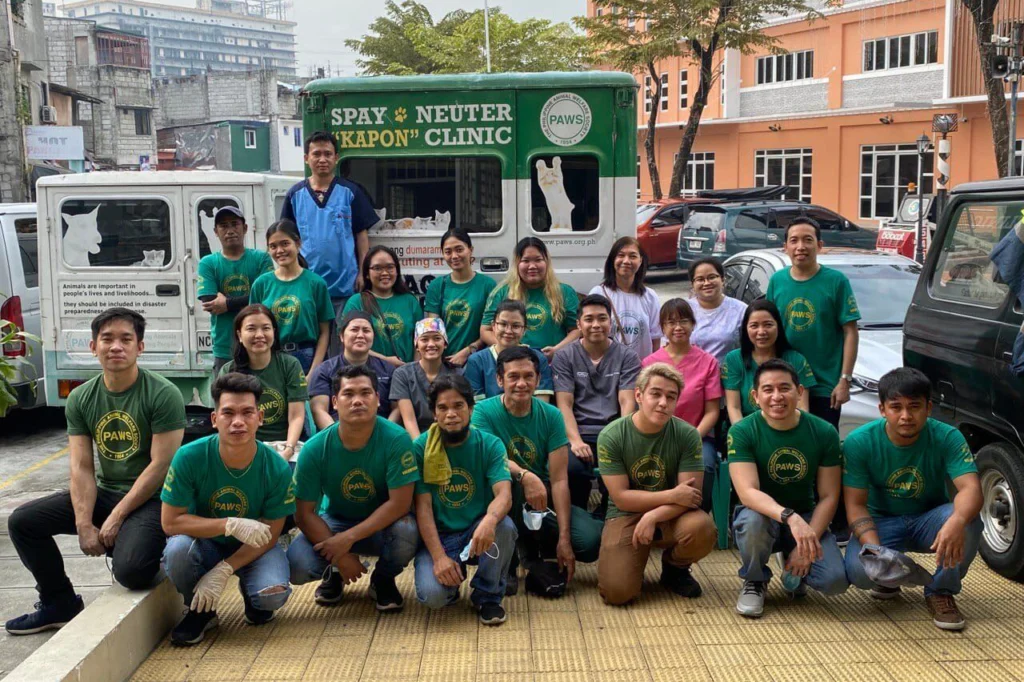
Spay/Neuter (Kapon) Outreach
To conduct a spay/neuter outreach in your province, city or neighborhood, a sponsor needs to cover the cost of drugs, medical supplies, and fuel or airfare of our vets and volunteers, as well as their food and lodging, if applicable.
PAWS absorbs the cost of closing down our low-cost clinic for the duration of the outreach.
How to organize a kapon outreach in your area
To organize a successful spay/neuter outreach, we will need the help and cooperation of your LGU and the support of individuals or organizations who would be willing to sponsor the activity. These are scheduled at least one (1) month in advance to give us time to prepare.
1
Contact the barangay
2
Propose a venue
3
Create a marketing plan
Share your plan for informing the community, such as flyers, posters or community social media pages. To justify the travel and effort, PAWS aims to serve at least 30 cats or dogs per day, with estimated veterinary expenses of P30,000.
One outreach day can fix hundreds of cats and dogs, which means fewer accidental litters and healthier pets in your community. Be the reason your community has fewer strays. Organize a kapon outreach today, and PAWS will bring the clinic to you.

FAQ
Why do we need the LGU?
Will it solve our stray population problem?
How should owners prepare their pets?
Their pet must be at least 6 months old and healthy. Pet ensures must ensure that there is no coughing, sneezing, diarrhea, or other signs if illness. For dogs, ensure that it is not in heat. A veterinary assessment comes first, and surgery may be declined if the pet isn’t fit.
Who can sponsor a kapon outreach?
Individuals or organizations can sponsor, so approach your LGU, barangay officials, local businesses, pet shops and clinics, civic groups, schools and churches with a short proposal covering the date, venue, expected number of pets and what sponsors cover: drugs, supplies, and the PAWS team’s travel, food and lodging. Offering recognition on flyers and social posts helps.